Rehabilitation technology
Robotic Technologies in Rehabilitation
How robotic technology increases the intensity and precision of neuro-rehabilitation.
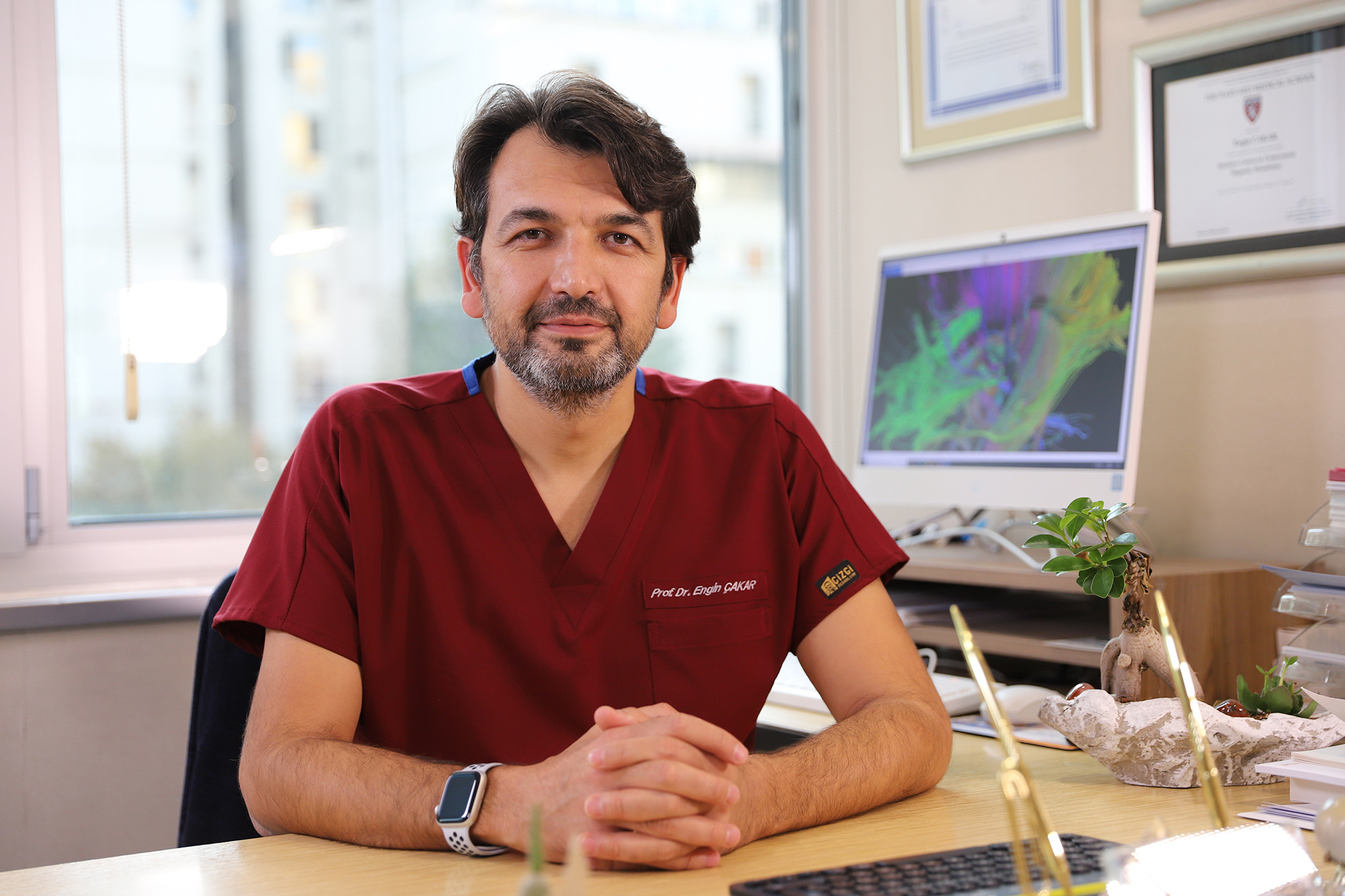 Prof. Dr. Engin Çakar · Physical Medicine & Rehabilitation
Robotic technology has transformed rehabilitation, allowing patients to practise movement more intensively, precisely and safely than traditional therapy alone. It is especially valuable after stroke, brain injury and spinal cord injury.
Why Robotics Help
Recovery depends on neuroplasticity — the nervous system relearning movement through intensive, repetitive, task-specific practice. Robotic systems deliver far more correct repetitions than manual therapy, adapt the level of support and challenge to each patient, provide motivating interactive feedback, and measure progress objectively. They also reduce the physical strain on therapists, allowing longer, more effective sessions.
Our Rehabilitation Technology
Our centre uses a range of advanced systems, including robot-assisted gait training (Lokomat) to relearn walking, early-mobilisation tilt tables (Erigo) to bring patients safely upright, arm and hand robotics (Armeo) to restore upper-limb function, isokinetic testing and training (Cybex) to measure and rebuild strength, and computerised balance systems to assess and improve stability.
Part of a Complete Programme
Technology supports — but does not replace — expert clinical care. Used within a comprehensive, personalised programme led by an experienced multidisciplinary team, robotic rehabilitation helps patients regain movement, strength, coordination and confidence, and make the most of their recovery.


