Brain injury
Rehabilitation for Brain Injury
How specialised rehabilitation helps people recover function and independence after a brain injury.
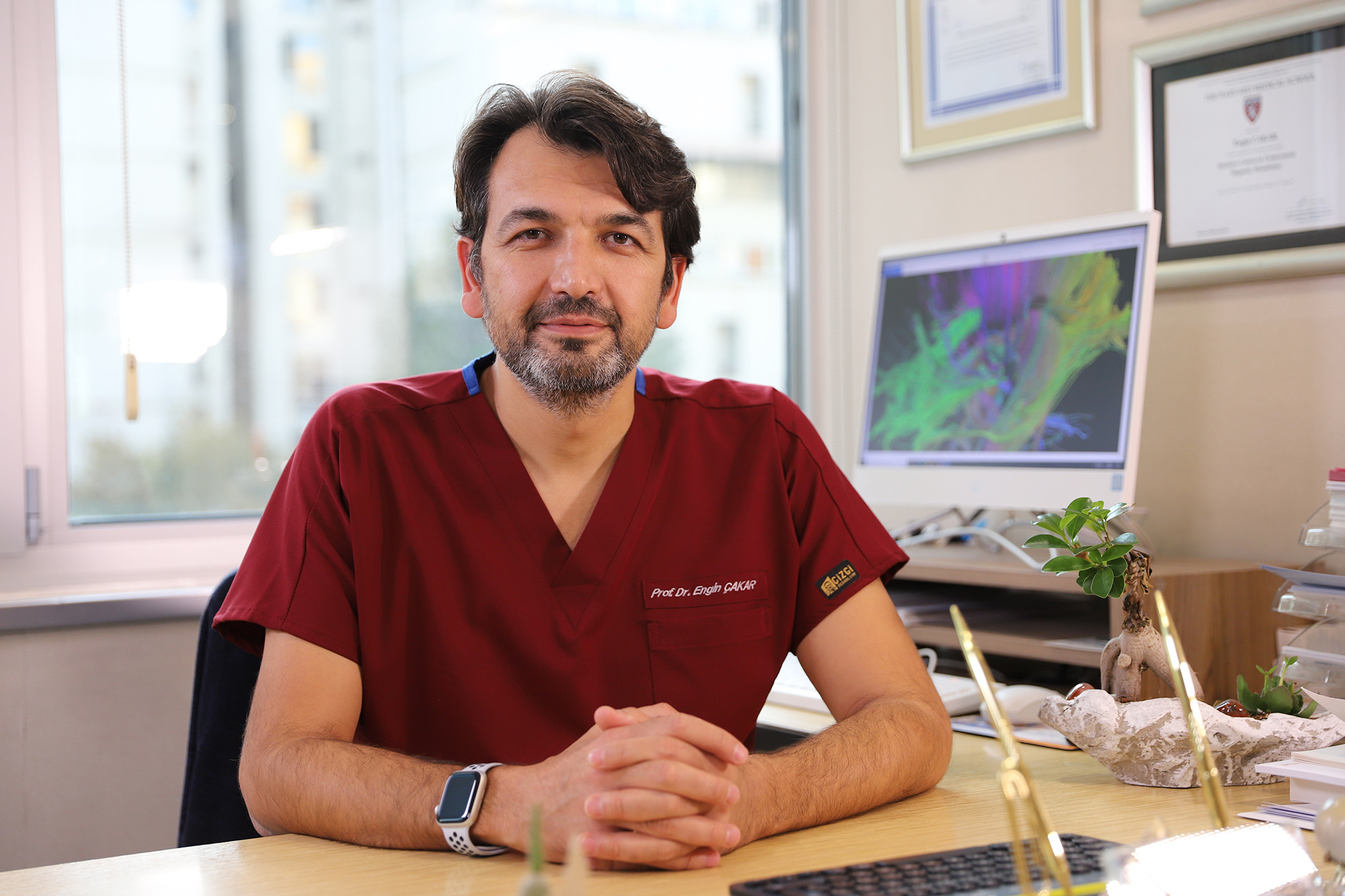 Prof. Dr. Engin Çakar · Physical Medicine & Rehabilitation
Rehabilitation is the heart of recovery after a brain injury. The brain can reorganise and relearn — neuroplasticity — and structured, intensive rehabilitation is what turns that potential into real, lasting progress.
When It Begins
Rehabilitation starts as soon as the person is medically stable, often in hospital, and continues through inpatient, outpatient and community or home-based programmes. Earlier, well-targeted rehabilitation is generally linked to better outcomes.
A Multidisciplinary Team
Recovery is delivered by a coordinated team. Physiotherapists rebuild strength, balance and mobility. Occupational therapists restore everyday skills such as washing, dressing and returning to work. Speech and language therapists address communication and swallowing. Neuropsychologists and counsellors support memory, attention, behaviour and mood, which are often affected after brain injury.
Therapies and Technology
Programmes combine repetitive, task-specific practice with strengthening and cognitive retraining. Modern centres add robot-assisted gait and arm training, functional electrical stimulation and virtual-reality tasks to increase the amount and precision of practice.
Goals and Support
Goals are personal and realistic — walking, using the hands, communicating, or living independently. Progress can be uneven, so motivation, family involvement and psychological support matter enormously. With committed, specialist neuro-rehabilitation, many people with brain injuries make substantial gains and rebuild a meaningful, independent life.